Today, parents and teachers should inspire children to play. Is today’s world a less friendly place to play? Kids require to be motivated, involving active engagement and discovering joyfulness out of play. According to American Academy of Pediatrics, a policy was released in 2018 summarizing developmental and neurological research on play and says that simple repetitive games provide the happiness of prediction. Parents should encourage playful learning for their children at their first two years of life.
Do children need to be scheduled every minute of the day with structured activities? Play should not be seen as unimportant and old-fashioned. Dr. B. Dreyer, director of developmental and behavioural Pediatrics at New York University School of Medicine said, “The old saying is, play is the work of children. Play is the way they learn and the way they develop. It’s imperative to understand how all of us can encourage play” (P. Klass, M.D. 2018).
How do kids of today develop skills in play? Collaboration and innovation are fundamental skills for kids and we must advocate these skills in the home and at school. Kids don’t need a lot of fancy toys. We should look for moments during our play time with kids to see how their development is progressing.
Educators need to value and promote playful learning in early childhood classrooms. Kids learn by discovering and we should aim to give them positive reinforcement for what they are doing well. How do we inject in kids today that face time conversations with one another is valuable? Kids can be taught to use their imagination while they are reading and also, we can promote physical exercise and being one with nature is a great way to reduce stress. We shouldn’t be intimidated to share some of our happiness as kids explore the world. “Play is the most important part of childhood,” Dr. Dreyer said. From play, kids develop emotionally, cognitively and their language improves immensely. “Play is often talked about as if it were a relief from thoughtful learning. But for children, play is genuine learning. Play is the work of childhood.” -Fred Rogers
Recently, I read Choice Time: How to Deepen learning Through Inquiry and Play by R. Dinnerstein. Play is learning and their choices are their voices. Teaching kids to be curious and to create imaginative play is crucial for all ages.”Play is the engine that drives their learning” (NAEY2009). My high school English classes begin with choice reading and as a result, their voices develop for writing ideas later in the day or during the week.
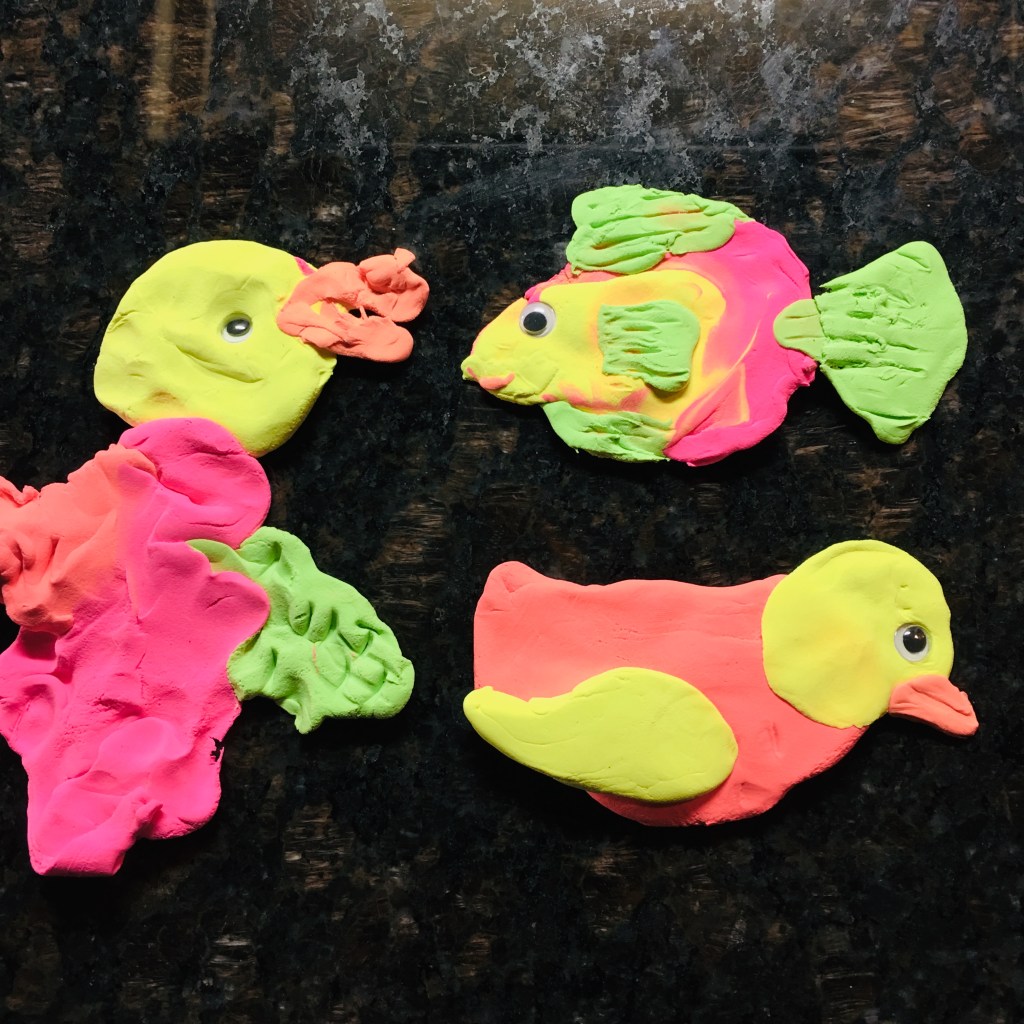
August 28th, 2019 I celebrated a special milestone birthday and our nieces appealingly created colourful art for me. I was touched by their enthusiasm as they presented the pieces to me. Time was taken to explore, play and shape their art pieces into their own creations. They were curious, imaginative, flexible, and resilient when they shaped their art products and often these qualities are lost from kids today. Acknowledging the strengths of each child and coaching them towards improvement is crucial. Assisting kids to develop their voices and to become curious learners helps to enrich their lives in many ways. How can we keep the sense of discovering and exploring alive in our classrooms without assigning a task “to do”every day?

 Uncommon Beauty in Writing